Openers & grip
Best Non-Slip Jar Opener Pads for Elderly Hands: Pad vs Base-Pad vs Mounted
On this page
Which option fits which situation?Which one fits which handCare, cleaning, and small printSourcesOur pick: a plain silicone pad is the best non-slip jar opener pad for elderly hands that can still twist, and the OXO Good Grips Jar Opener with Base Pad is the better choice when twist is tiring. A pad is not an opener: it stops the lid slipping so a hand can twist. If twist itself is gone, choose the EZ Off under-cabinet opener or the Robo Twist Deluxe electric opener instead. Joint-protection tips describe avoiding tight pinch, and each tool below removes a different amount of pinch from the job.
This page compares what the makers say about their own jar-opening products; we do not lab-test products. Check the live listing for the exact model and read the seller’s return terms before ordering. This page offers shopping research, not medical advice.
Affiliate disclosure: As an Amazon Associate we earn from qualifying purchases. Direct
dplinks are catalog-verified identities only. Search links can mix variants. Check manufacturer, model, seller and price.
Which option fits which situation?
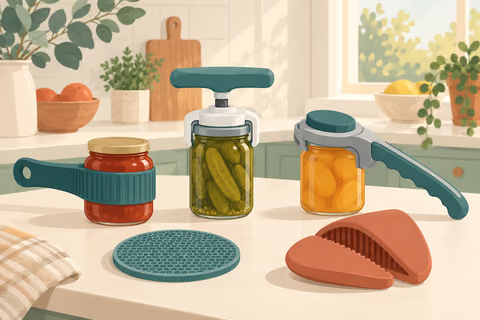
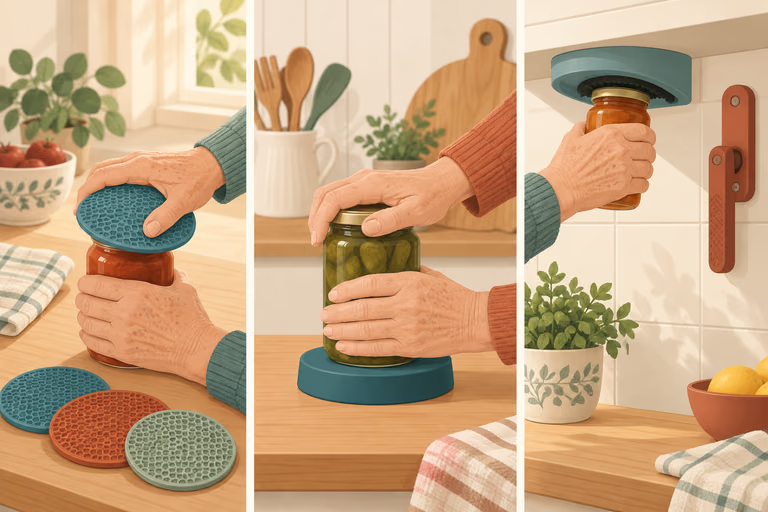
Best for hands that still twist but slip: a silicone jar opener pad. The pad grips the lid so a twisting hand does not slip. It costs the least and stores in a drawer. It adds nothing to the twist force itself, and wet lids still slip, because a damp pad on a damp jar can fail where a dry one worked. Pads are a generic category, so confirm the size, material, and care instructions on the listing. Search on Amazon
Best base-pad opener when twist is tiring: OXO Good Grips Jar Opener with Base Pad (SKU 1173600). View Amazon listing OXO’s product page says a base pad reduces the force required and graduated teeth fit jars of all sizes. The non-slip base holds the jar on the counter while the opener slides over the lid and twists counter-clockwise. It measures 9 x 5 x 1 inches.
Best when hands cannot grip at all: EZ Off Under-Cabinet Jar Opener. View Amazon listing The Zulay Kitchen page documents a manual opener that mounts under a cabinet (adhesive and screws included) and holds the lid with gripping teeth while you twist the jar. It only works if the jar can be lifted to the mount and someone can install it securely.
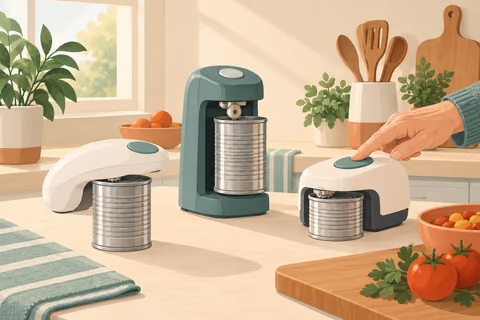
Best when twist is gone entirely: Robo Twist Deluxe. View Amazon listing The Granitestone page documents one-button automatic operation and adjustable grips for lids from 1.2 to 3.5 inches. The earlier Robo Twist Original View Amazon listing is a different model, so confirm “Deluxe” on the listing if you want the higher-torque version. The jar must fit the lid range and the batteries must be fresh, but the hand only presses a button.
Which one fits which hand
| Tool type | What it removes from the job | Needs | Best when |
|---|---|---|---|
| Silicone pad | Slip only | Some remaining twist | Grip is weak but twist still works |
| Base-pad opener | Slip plus most of the twist | Counter space, two steady hands on the tool | Twist is tiring but not gone |
| Under-cabinet opener | All grip, most of the twist | A cabinet, a mounted plate, lifting the jar | Hands cannot close around jars at all |
| Electric opener | All grip and all twist | Fresh batteries, jar that fits the device | Twist is gone and lifting is still easy |
The cheap-first order is also the honest order. Try a pad first if any twist remains — it is a few dollars and a drawer does not care. Move to a base opener when the pad is not enough. Move to an under-cabinet or electric opener when twist is the problem. Each step adds cost, installation, or charging, so take the step only when the previous one fails.
Two practical checks before any of them: measure the jars she actually uses (wide pickle jars and small sauce jars sit differently in every tool), and check whether she can hold the jar steady while the lid turns. A pad cannot help a jar that skates across the counter — that is a job for the under-cabinet plate or a damp towel under the base.
Care, cleaning, and small print
Silicone pads rinse and dry in seconds. Base-pad openers vary; check the listing for whether the top piece comes off for washing. Under-cabinet plates take screws and a place near the counter edge where the jar hangs free — measure before drilling. Electric openers need fresh batteries; a dead motor on canning day is its own failure. None of these tools break vacuum by themselves except through the twist or lift they enable — a stubborn vacuum-sealed lid may still need the water-bath or tap method described in how to open jars with arthritic hands.
If wrist pain, numbness, or joint swelling is new or getting worse, that is a conversation for a clinician or occupational therapist, not a shopping problem. Tools change the task; they do not change the condition.
Frequently asked questions
What is the best non-slip jar opener pad for elderly hands?
A plain silicone pad is the best fit when the hands can still twist a lid but slip on it, since it only adds friction. If twisting is tiring, the OXO Good Grips Jar Opener with Base Pad holds the jar for you and lowers the force needed. Check the listing for size and care instructions before buying.
Will a pad open a vacuum pickle jar?
It may help you hold the jar. It does not break vacuum by itself. If the seal is strong, the pad plus a firm twist may work; if not, the jar needs a leverage tool or the tap-and-twist method.
Pad vs electric first?
Use a pad first while some twist remains, and choose an electric opener such as the Robo Twist Deluxe once twist is gone and the jar fits its 1.2 to 3.5 inch lid range. A pad is a few dollars; an electric opener is a device that needs batteries and has a fit range.
Do pads work on plastic lids?
Usually yes, and plastic lids are easier than metal. The pad still only adds friction — a childproof-style ridged cap may need the leverage of a base opener.
Where do I mount an under-cabinet opener?
Under a cabinet near the counter edge, where a jar can slide in from below and hang free. Check that the cabinet underside is solid wood or has a mounting board; the plate holds the jar while you twist.
Is one pad enough for the whole kitchen?
Keep one dry pad for lids and a second for screw caps or bottle tops. Pads wear, and a greasy pad is a slick pad. Two cost little and live in different drawers.
Sources
Related reading: Manual jar grippers · How to choose a jar opener · Under-cabinet jar openers
Models named in this guide
Catalog-verified identities, checked against the listing on the date shown. Prices and availability change; re-check the listing before buying.
- no photoOXO Good Grips Jar Opener with Non-Slip Base PadView the listing →
 EZ Off Under-Cabinet Jar OpenerView the listing →
- no photoRobo Twist Original Electric Jar OpenerView the listing →
- no photoRobo Twist Deluxe Jar OpenerView the listing →